On 2 October 2026 the second DiscoVereto excavation campaign came to a close, marking a further step in the wider Leucantica project. The mission continued the research path already laid out during May and June 2026 thanks to the PNRR Storie meridiane funding [click here].
Thanks to the Smart In call, the archaeological work has expanded, allowing the investigations to be extended to the harbour of San Gregorio as well. The results of the research and the related initiatives are all gathered on this website and on the social media channels of the DiscoVereto mission.
DiscoVereto brings together excavation, training, the study of finds and community archaeology as a means of raising awareness and actively involving the public, with the aim of telling the story of a site that is still little explored and returning it to the community.
Follow us to stay up to date!
Aims
The Leucantica project aims to reconstruct the cultural dynamics and exchange networks of the Capo di Leuca through an approach that combines digital methods, fieldwork and public archaeology. At the heart of the project is the excavation of the settlement of Vereto, never before the subject of systematic investigation despite its historical and archaeological importance. The ancient Messapian centre, originally spread over more than 60 hectares and defended by a mighty circuit wall, controlled two landing places, Leuca and San Gregorio — the first that ships encountered on leaving the Adriatic for the Ionian Sea.
Vereto was one of the main Messapian centres of southern Salento, occupied at least from the Bronze Age until Roman times. Ancient sources record several names for the town, including Οὐερητόν, Οὔρητον, Beretum and Veretum, and scholars have long debated its possible connection with the Hyrie mentioned by Herodotus.
The project also focuses on community archaeology, involving local people through citizen-science activities in the spirit of the Faro Convention: educational workshops open to the public, shared storytelling, seminars and lectures at the Archaeological Museum of Vereto, and a documentary following the whole experience.
Methods
The research combines stratigraphic excavation, the study of literary and archival sources and landscape analysis. Every layer, wall, fragment or trace is recorded in order to reconstruct the history of the site and its transformations.
Topographic and photogrammetric survey, 3D models, LiDAR remote sensing, GIS and non-invasive prospection, carried out partly with the INGV, complement the excavation. These tools help to read what is not visible on the surface and to link the settlement with its walls, cemeteries, roads and landing places.
The research also covers the finds already held in the Museum of Vereto, the Castromediano Museum in Lecce and the stores of the Soprintendenza: pottery, metalwork, inscriptions, architectural elements and coins. Data and images also feed into reconstructions, videos and content for the public.
Institutions involved
DiscoVereto brings together universities, heritage authorities, museums, local administrations and cultural organisations of the area.
The project is led by the University of Naples "L'Orientale", under the scientific direction of Valentino Nizzo, with topographic coordination by Angela Bosco and Rosario Valentini. The Leucantica project was conceived by Valentino Nizzo and the archaeologist Daniela Ventrelli — Puglia Culture.
The excavation involves undergraduate and postgraduate students in Archaeology from the University of Naples L'Orientale, the inter-university Specialisation School in Archaeological Heritage Or.SA (Orientale-Salerno), the University of Salerno and other universities. The research is carried out under a concession from the Italian Ministry of Culture and in collaboration with the Soprintendenza, the Apulia Region, the Castromediano Museum and the Archaeological Museum of Vereto.
Discover more about DiscoVereto
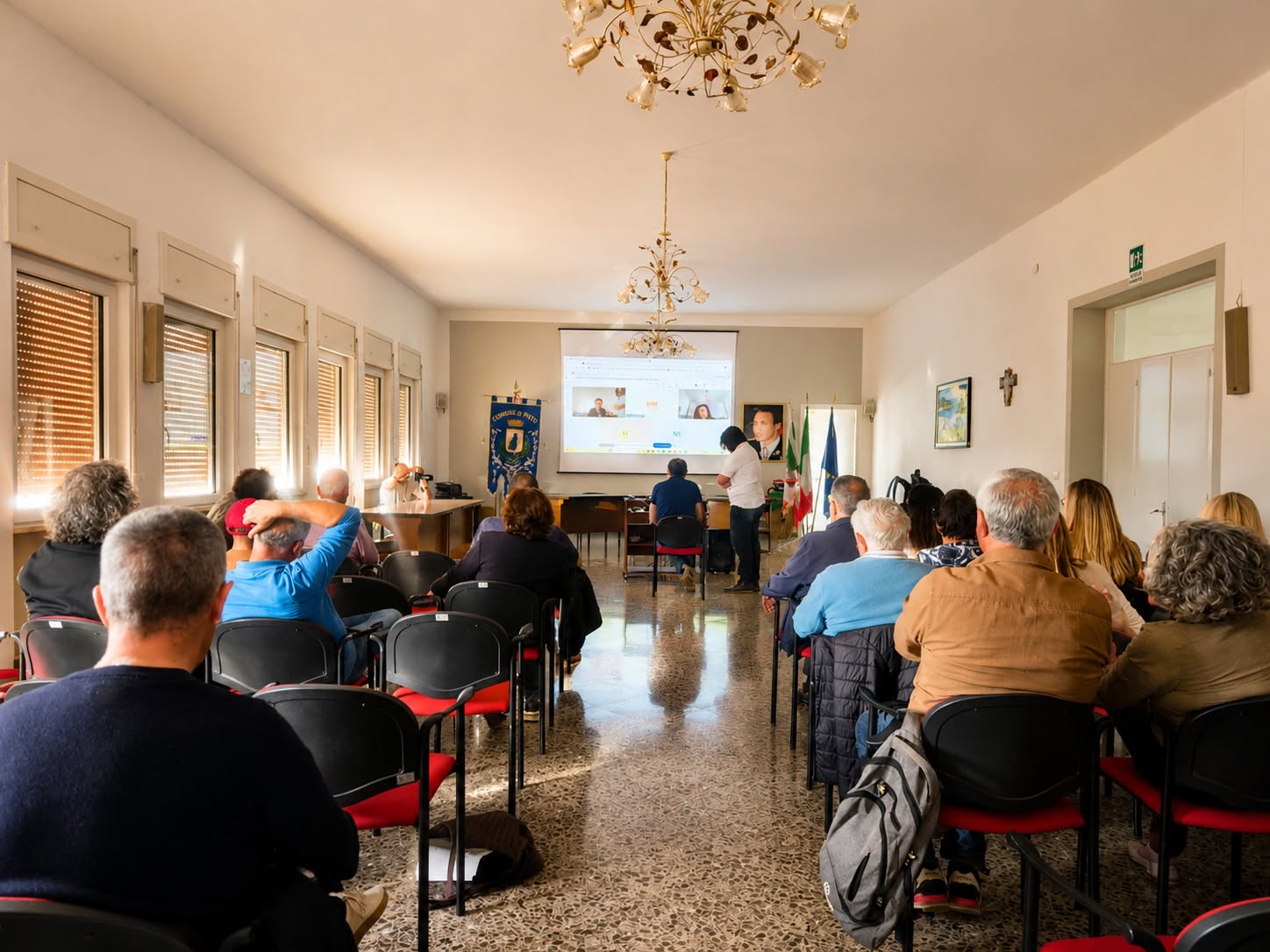
Seminars and Exhibitions
Public meetings, lectures and small exhibitions to follow the dig and discover the sources, finds and stories of Vereto.
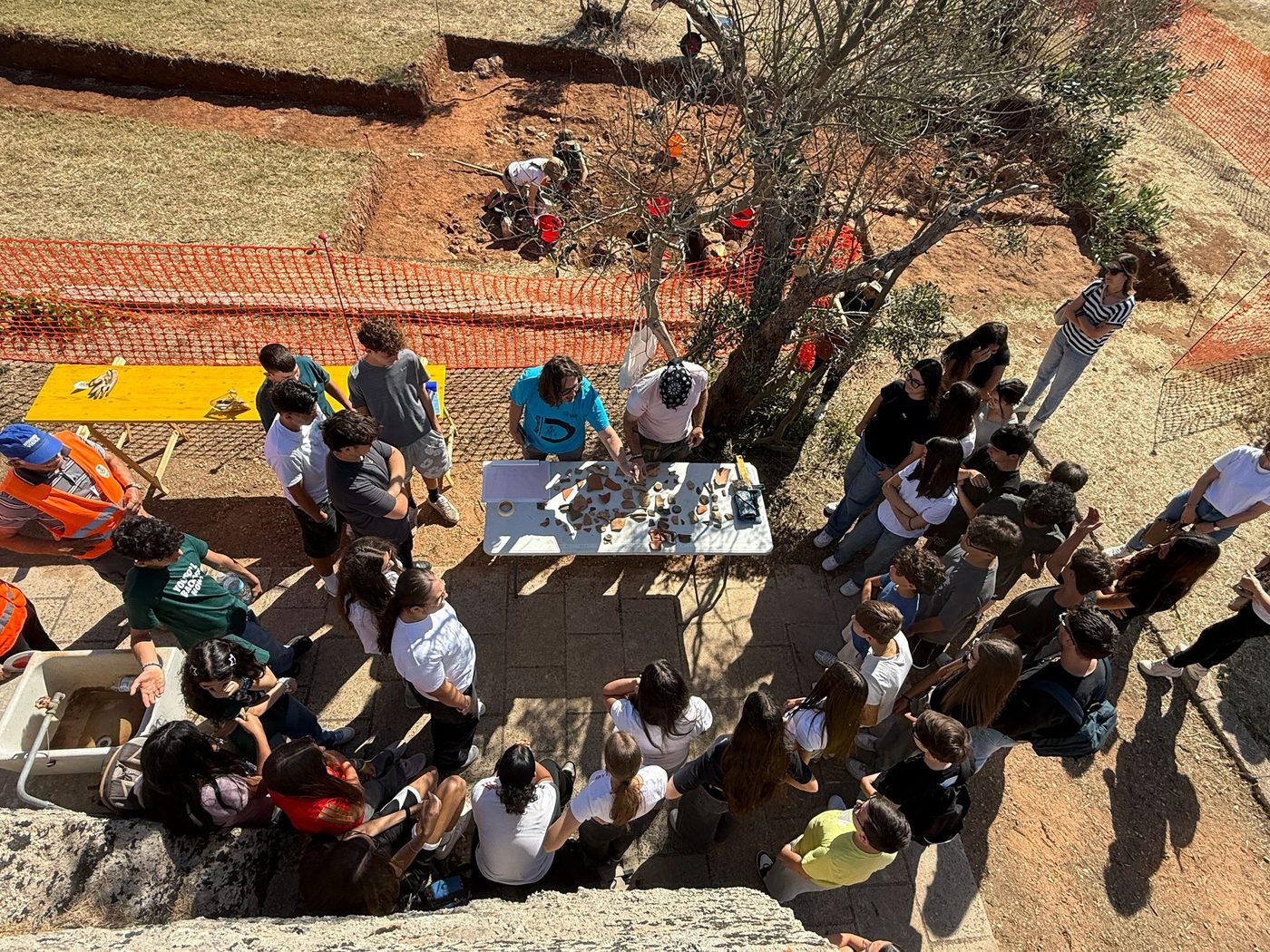
Workshops and Tours
Activities for schools, residents and visitors: guided visits, archaeological walks, hands-on workshops on the finds and reading the landscape.
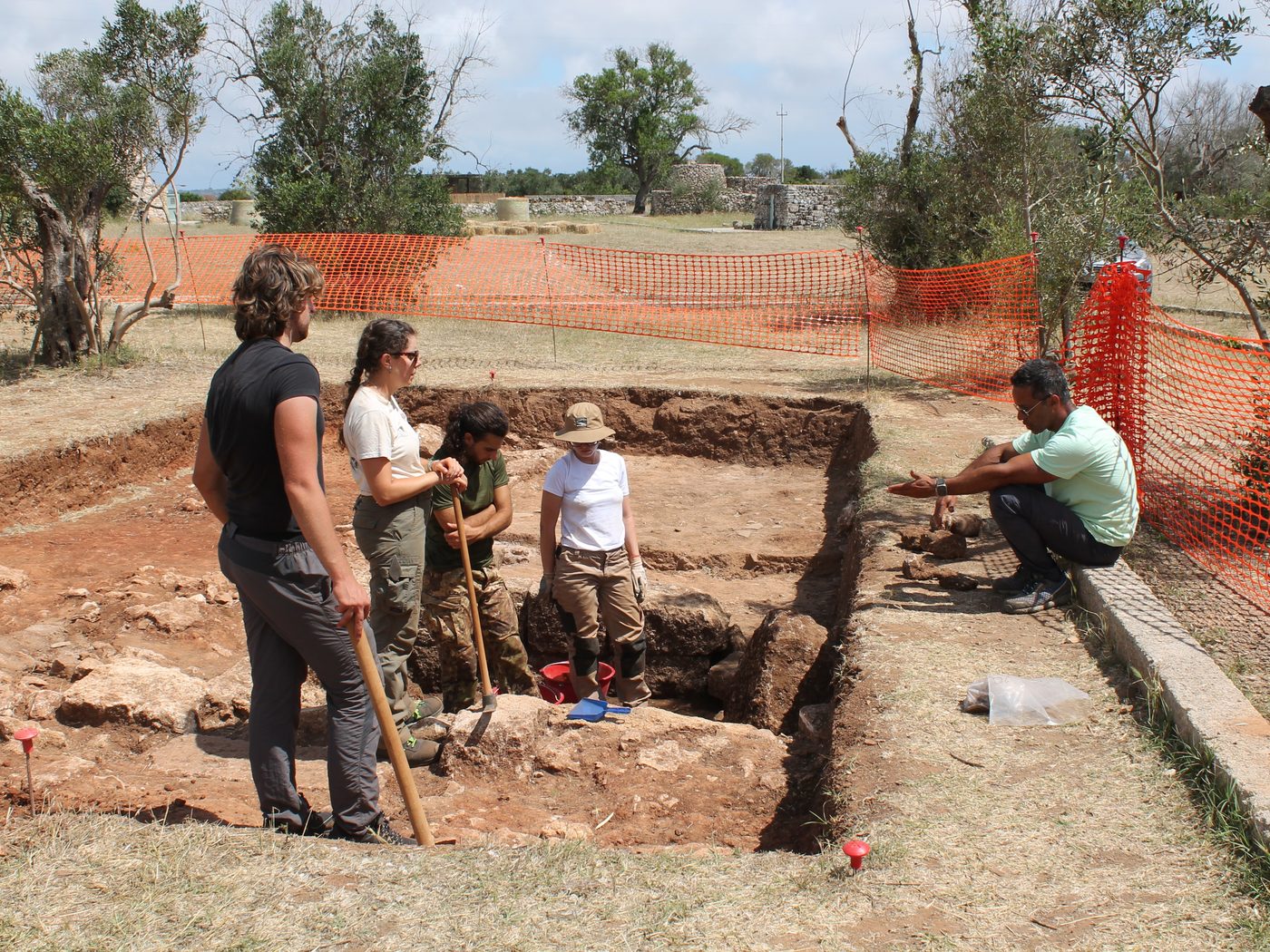
News
Updates from the 2026 campaign: pictures from the field, stories from the trenches, curiosities and short insights.
Vereto and San Gregorio
Come and visit our excavation areas:
During excavation periods the Vereto dig is the welcome point for visitors; directions to San Gregorio are also given there when the coastal activities are open to the public. To learn more about the archaeology of Patù, visit the permanent exhibition at the Archaeological Museum of Vereto — MAV, Piazza Indipendenza 32.
If you enjoy our work — digital work included — please leave a review on TripAdvisor.